Square Face Shape: How to Tell, What Works, and What to Avoid
A practical guide to recognizing a square face shape, checking it against nearby face types, and choosing hairstyles, glasses, and grooming choices that soften or balance a strong jawline.

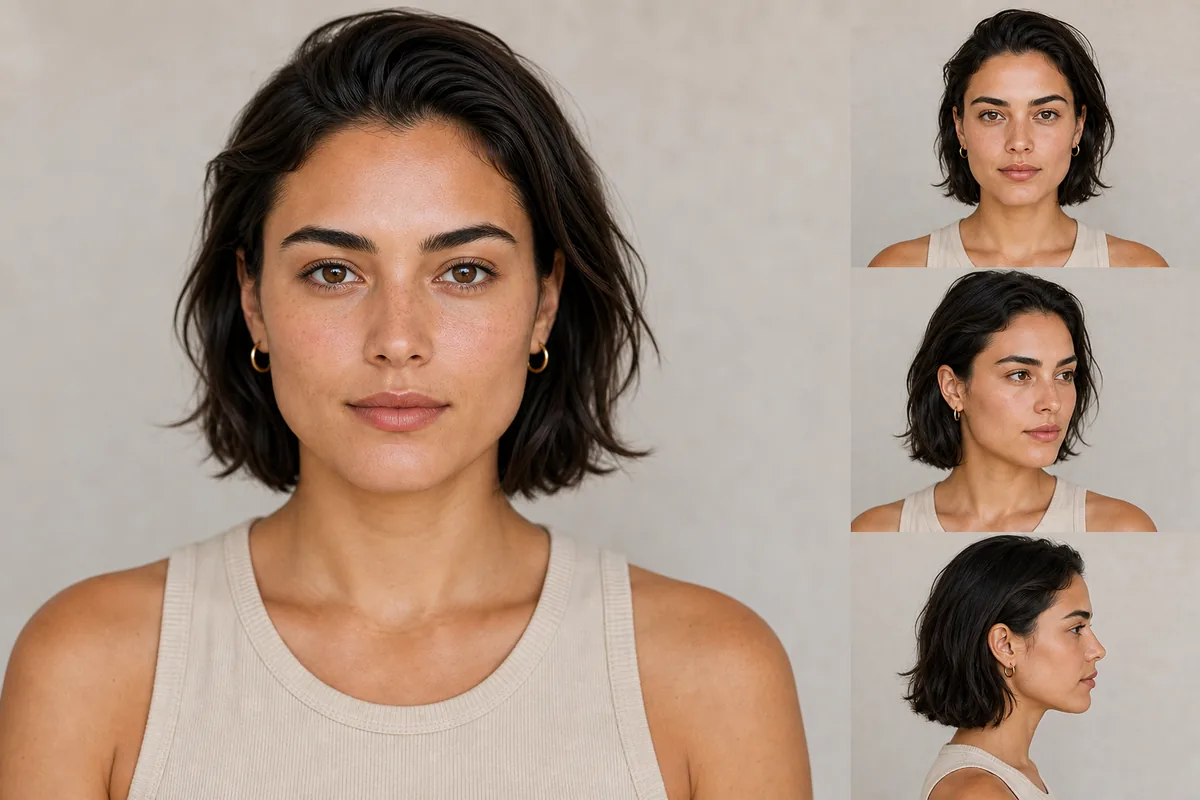
Table of Contents
Search results for square face shape often jump straight to haircuts or celebrity examples. That helps only after you know whether the shape is really square. This guide keeps the decision practical: confirm the signs, measure the outline, compare square with round and oblong, then use the result for hairstyles, glasses, beard choices, and everyday styling.
Square Face Shape Signs
A square face is defined by the whole outline, not only by having a strong jaw. Look at the relationship between the forehead, cheekbones, jaw, and face length.
- Forehead, cheeks, and jaw look close in width: The face does not taper sharply from top to bottom. The side outline reads straighter than heart, diamond, or triangle shapes.
- Jaw corners are visible: The jawline has a defined angle near the back of the jaw rather than a soft continuous curve.
- Face length is close to face width: Many square faces look nearly as wide as they are long. If the same jaw appears on a much longer face, compare oblong instead.
- Chin is not the main point: The lower face may be strong, but the chin usually looks broad or balanced rather than narrow and pointed.
Best first check
Use the jawline as the second check, not the first. A strong jaw can appear on oblong or rectangle faces too. Square is more likely when the widths stay similar and the face length is not dramatically longer than the width.
How to Measure a Square Face Shape
Use a straight front-facing photo, neutral expression, and hair pulled away from the forehead. Avoid wide-angle selfies because they can make the jaw or cheeks look wider than they are.
- Measure forehead width: Compare the widest visible point across the forehead, usually between the temples.
- Measure cheekbone width: Measure across the cheekbones or estimate the widest cheek area in a photo.
- Measure jaw width: Compare the jaw corners. A square face usually keeps this number close to the forehead and cheekbone width.
- Check face length: Measure from hairline to chin. If length is much greater than width, the face may be oblong with a square jaw rather than square.
- Compare the pattern: A likely square pattern is similar forehead, cheekbone, and jaw widths with an angular lower face.
Square vs Round vs Oblong Face Shape
Square, round, and oblong can overlap because all three can have balanced widths. The difference is usually jaw angle and face length.
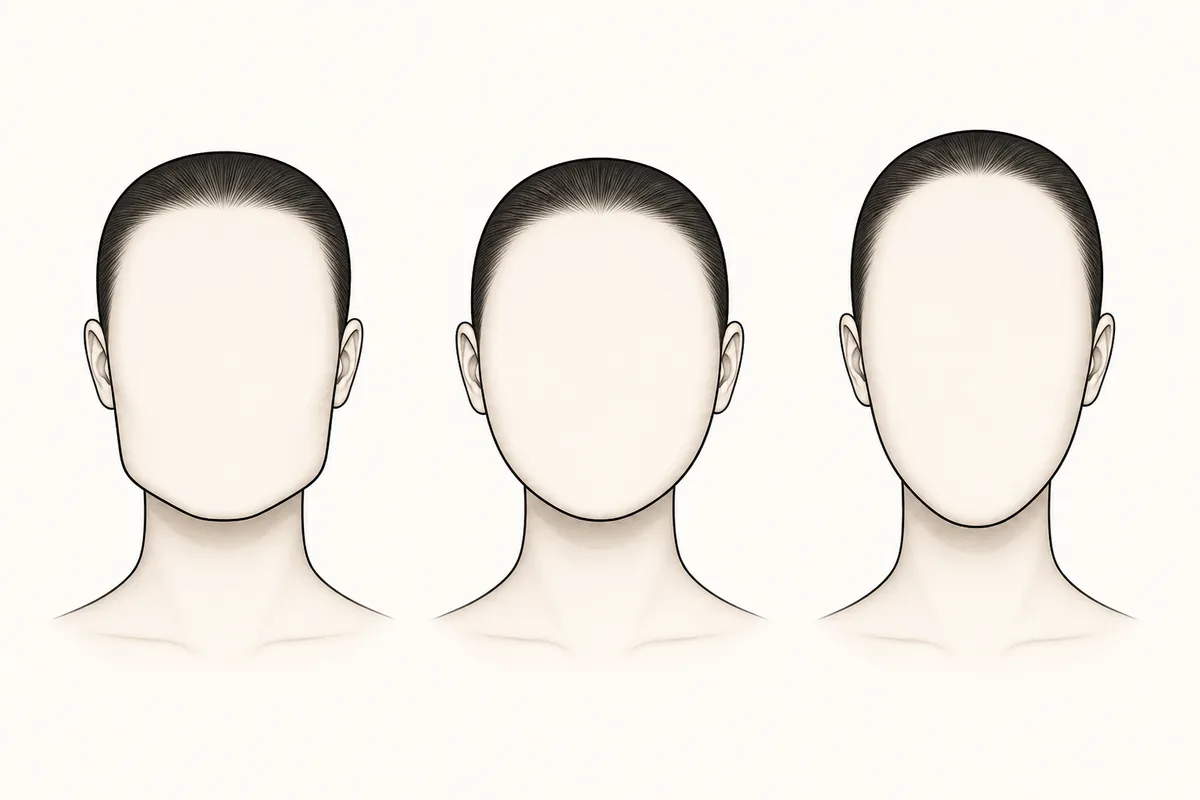
Square is easiest to separate from round and oblong when you compare both jaw angle and face length.
| Shape | Width pattern | Jawline | Best check |
|---|---|---|---|
| SquareBalanced angular outline | Forehead, cheeks, and jaw look similar in width. | Jaw corners are defined and the chin looks broad or balanced. | Compare width first, then confirm the jaw angle. |
| RoundBalanced soft outline | Width and length may be close, but the sides look curved. | Jawline is softer with fewer visible corners. | Look for curves around the cheeks and chin. |
| OblongLonger straight outline | Forehead, cheeks, and jaw may be similar, but length is clearly greater. | Jaw may be square, but the whole face reads longer. | Measure face length before choosing square. |
Best Hairstyles for a Square Face Shape
The goal is not to hide the jawline. A square face often looks strong and photogenic. The better goal is to decide whether you want to soften the angles, add vertical length, or keep the structure sharp.
| Styling goal | Try | Be careful with |
|---|---|---|
| Soften the jawline | Side parts, long layers, soft waves, curtain bangs, textured bobs, or movement below the cheekbone. | Blunt chin-length cuts that stop exactly at the widest jaw point. |
| Add vertical balance | Volume at the crown, longer top texture, swept fringe, or layers that draw the eye upward. | Flat heavy styles that widen the sides without adding height. |
| Keep a sharp structured look | Clean crops, sleek bobs, controlled fades, or angular styling balanced with softer edges. | Stacking too many hard lines in hair, beard, and glasses at the same time. |
Glasses, Beard, and Styling Tips for Square Faces
Once the shape is confirmed, style choices become easier because you know where the visual weight sits.
Glasses for square face shape
Round, oval, thin metal, rimless, and softly curved frames often balance a square jaw. Very boxy frames can work for a bold look, but they may repeat the same angles and make the face read more severe.
Square face shape men
For men, the square outline often pairs well with textured crops, side parts, medium fades, and beard shapes that keep the jaw clean without adding too much width at the corners. If the face is short and wide, extra height on top usually helps.
Makeup and contour direction
For makeup, avoid treating the jaw as something that must disappear. A soft contour near the jaw corners and gentle highlight through the center of the face can keep the structure while reducing harsh edges.
Common Square Face Shape Mistakes
Most wrong results come from treating one feature as the whole face shape.
- Calling every strong jaw square: A strong jaw can also belong to oblong, rectangle, or triangle faces. Check length and forehead width before deciding.
- Ignoring camera angle: Low-angle selfies can enlarge the jaw, while high-angle selfies can narrow it. Use a level camera for the cleanest check.
- Confusing square and round: Round faces can have similar width and length, but the jaw and hairline usually read softer and more curved.
- Choosing styles only to hide the jaw: Square faces often look best when the style works with the structure. Softness helps, but complete hiding can make hair or glasses feel heavy.
Square Face Shape FAQ
Related Face Shape Tools
- Face Shape Calculator - compare forehead, cheekbone, jaw, and length ratios.
- Face Shapes Chart - see square next to the other common face types.
- Face Shape Detector for Glasses - turn your face shape result into frame suggestions.
- Face Shape Hairstyle Detector - connect your result to haircut and styling ideas.
Last updated: June 28, 2026