Face Shape Quiz: 7 Questions to Find Your Closest Face Type
A practical face shape test that helps you compare outline, width, and jawline before you choose hairstyles, glasses, or a more precise calculator.

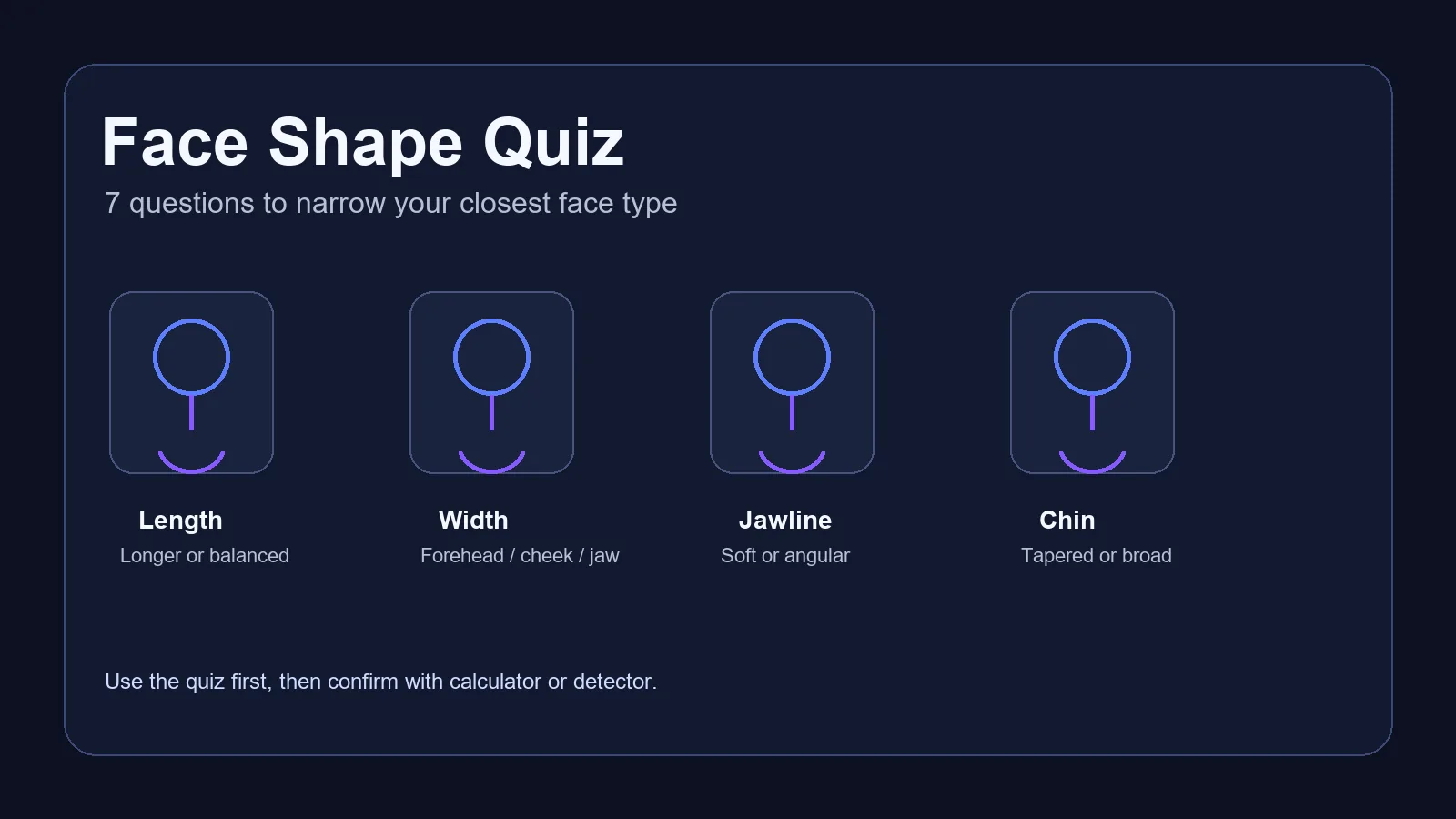
Table of Contents
Many people search for a face shape quiz because they want a faster answer than measuring every feature by hand. The problem is that many quizzes ask vague beauty questions instead of checking the outline that actually matters. A useful face shape test should help you compare forehead width, cheekbone width, jawline width, face length, and the way your chin narrows or softens. Once those signals are clear, you can move on to hairstyles, glasses, beard planning, or a photo-based detector with much more confidence.
What a Good Face Shape Quiz Actually Checks
A reliable face shape quiz should move from broad outline to finer detail. That order keeps you from forcing one label too early.
- Face length first: If your face is clearly longer than it is wide, you are usually comparing oval or oblong before round or square.
- Widest area second: The forehead, cheekbones, or jawline usually decides which branch of the quiz you should follow next.
- Jawline and chin third: A soft rounded jawline often points in a different direction from a flatter square jaw or a narrow tapered chin.
- Photo context last: Hair, beard bulk, angle, and expression can change how your face reads, so the quiz should remind you to correct for them.
7 Face Shape Quiz Questions to Ask Yourself
Use these questions in order. Each one removes one or two likely face types and makes the final choice easier.
- Is my face longer than it is wide?: A clear yes usually puts you closer to oval or oblong. If length and width feel close, round or square becomes more likely.
- What looks widest: forehead, cheekbones, or jaw?: Forehead often points toward heart, cheekbones toward diamond, and jawline toward triangle. Similar widths can point toward square or oval.
- Does my jawline look soft or angular?: Soft curves often support oval or round, while a flatter and more defined jawline supports square.
- Does my chin taper quickly?: A narrower or more pointed chin often supports heart or diamond rather than square or round.
- Do my cheeks visually dominate the outline?: Full cheeks with fewer hard angles often push the result toward round. Strong cheekbones with a narrower forehead and jaw often suggest diamond.
- Would my shape change if I removed hairstyle or beard influence?: Heavy bangs can hide forehead width, and beard bulk can widen the jaw. Strip those effects out before choosing the final label.
- Which two shapes am I stuck between?: Most people do not fit one label perfectly. If you are between two neighbors, use a calculator or photo detector to confirm the best styling direction.
Quiz tip
If your answers stay inconsistent, take a front-facing photo and compare it with the manual calculator instead of guessing from memory.
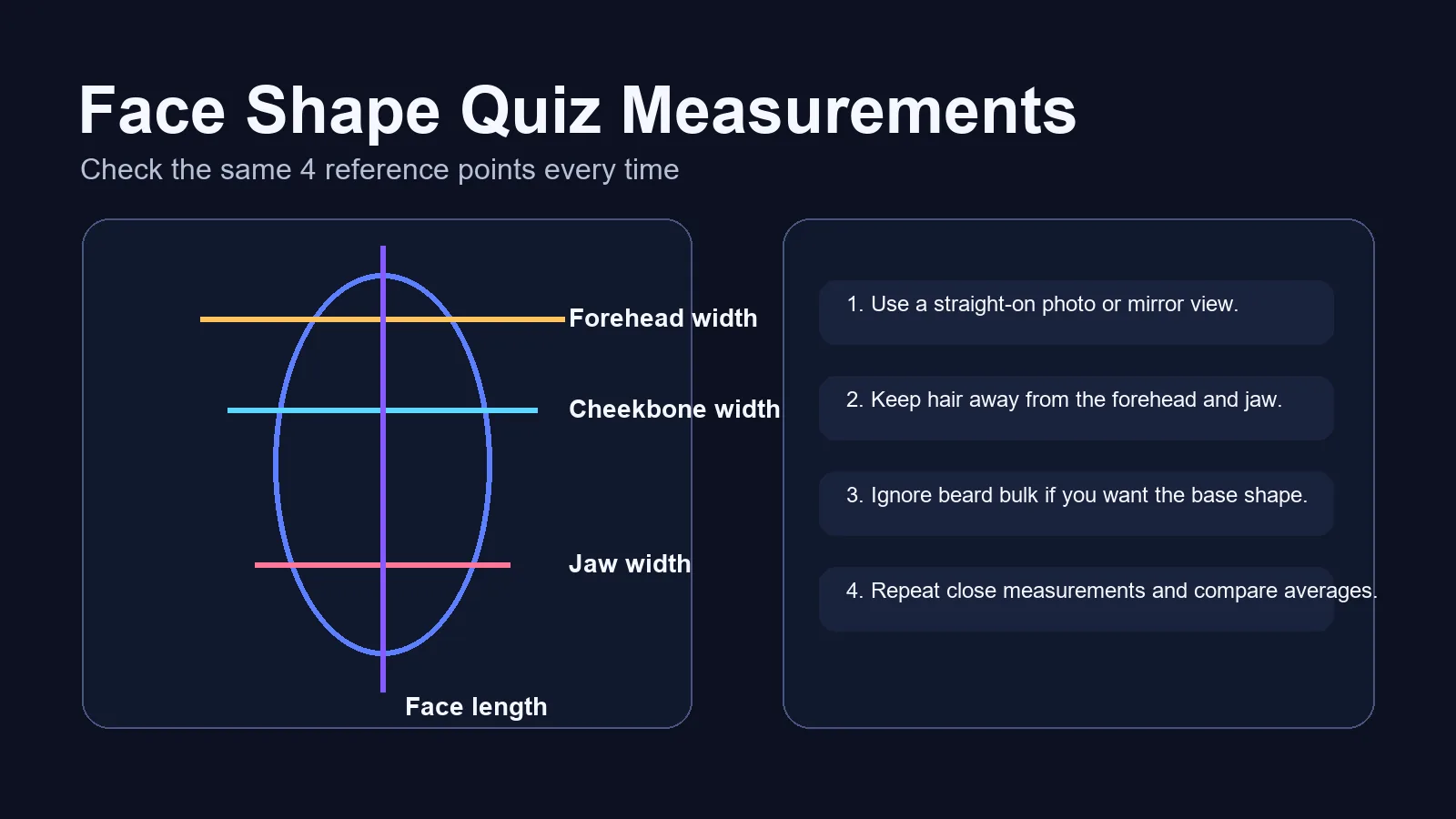
Use the same four checkpoints every time you take a face shape test. Consistency matters more than exact units.
Face Shape Quiz Answer Chart
Once you answer the seven quiz questions, this table helps you map the pattern to the closest common face type.
| Face shape | Typical quiz signals | Question that usually decides it | Best next step |
|---|---|---|---|
| OvalBalanced and slightly longer than wide | Length is moderately longer than width, forehead and jaw are fairly balanced, jawline stays soft. | Does the face look longer without feeling narrow or sharp? | Move to hairstyle or glasses guidance directly. |
| RoundSoft outline with similar width and length | Cheeks look full, angles stay soft, width feels close to length. | Do the cheeks dominate more than the jawline? | Compare styles that add structure or vertical balance. |
| SquareBroad forehead and defined jaw | Forehead, cheeks, and jawline feel close in width, with a flatter lower outline. | Does the jawline look strong even in neutral light? | Check softer layers or rounded frame shapes. |
| HeartWider upper face and narrower chin | Forehead or upper face looks widest, chin tapers down more clearly than the jaw corners. | Does the face narrow as it moves downward? | Compare fringe, lower-face balance, and frame width advice. |
| DiamondCheekbones are the widest point | Mid-face looks widest while forehead and jaw both stay narrower. | Do the cheekbones stand out more than forehead and jaw? | Confirm with measurements if heart shape also seems possible. |
| OblongNoticeably long with steadier sides | Length is the strongest signal, sides look straighter, width does not dominate anywhere. | Does the face keep reading long even after correcting camera angle? | Compare bangs, side volume, and wider frame balance. |
| TriangleJawline reads wider than forehead | Lower face broadens, forehead looks narrower, jawline visually anchors the outline. | Is the jaw clearly wider than the upper face without beard exaggeration? | Use styles that add balance to the temples or upper face. |
Common Face Shape Quiz Mistakes
Most quiz errors come from starting with style details instead of structure, or from judging the face through a distorted selfie.
- Letting hair decide the answer: Volume at the crown, bangs, or side fullness can change the visible outline and push you toward the wrong result.
- Ignoring beard or stubble bulk: Facial hair can make the jawline look wider and more angular, which often shifts softer faces toward square or triangle.
- Using one close selfie only: A near camera lens can widen the center of the face and flatten depth. Check two or three straight-on photos if possible.
- Treating one feature as the whole answer: A broad forehead alone does not guarantee heart shape, and a strong jaw alone does not guarantee square. The pattern matters more than one clue.
When a Face Shape Quiz Is Enough and When to Use AI
A quiz is a useful filter, but it is not always the final answer. The best next step depends on how close your result feels.
Use the quiz first when you want a fast styling direction
If you mainly want to know which haircut family, glasses shape, or beard balance to compare, the quiz gets you there quickly without extra tools.
Use a manual calculator when two shapes stay close
If you keep landing between oval and oblong, or heart and diamond, measurements give you a more transparent reason for the result.
Use an AI detector when you want a visual second opinion
A clear front-facing upload can confirm whether the same pattern appears in a real photo, which is especially useful when your memory-based quiz answers feel uncertain.
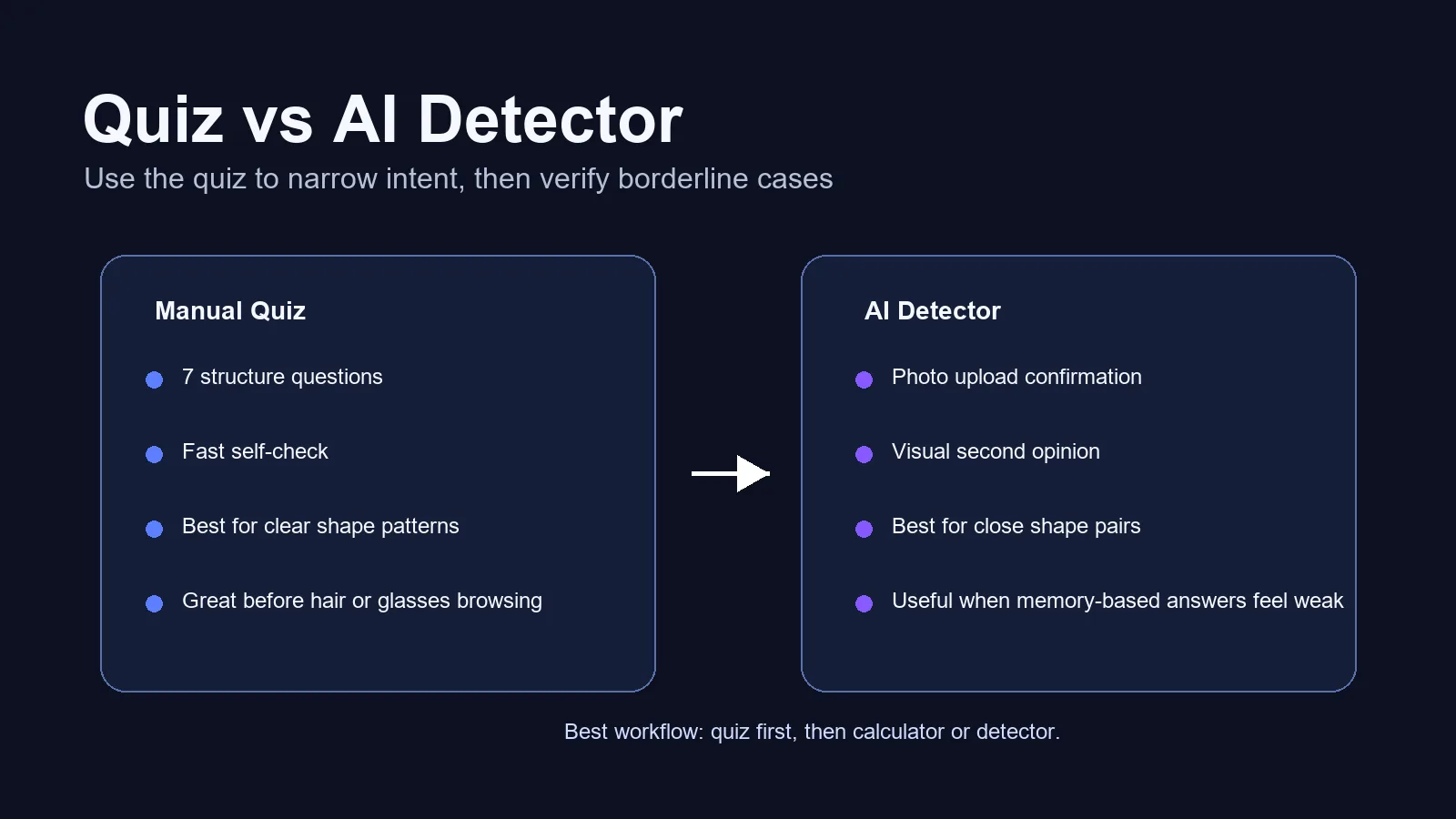
A quiz helps you narrow the pattern. A calculator or detector helps you verify borderline answers before acting on them.
Face Shape Quiz FAQ
Related Face Shape Pages
- Face Shape Calculator - check ratios manually or confirm a borderline quiz answer.
- Free Face Shape Detector - upload a photo for a quick second opinion.
- Face Shapes Chart - compare the seven main face types side by side.
Last updated: June 5, 2026