Heart Face Shape: How to Tell, What Works, and What to Avoid
A practical guide to recognizing a heart-shaped face, checking it against nearby face types, and turning the result into better hair, glasses, and styling decisions.


Table of Contents
Search results for heart shaped face often jump straight into haircuts or celebrity examples. That helps only after you are sure the label is right. This guide starts with identification, separates heart from diamond and triangle, then gives practical hairstyle, glasses, beard, and makeup direction you can actually use.
Heart Face Shape Signs
A heart shaped face is defined by the balance between the upper and lower face. One feature alone is not enough; compare the forehead, cheekbones, jaw, and chin together.
- Forehead or temples look widest: The upper face usually reads broader than the jawline, especially when hair is pulled back.
- Cheekbones are visible but not the only widest point: Cheekbones can be strong, but the face still feels top-led rather than cheekbone-led.
- Jawline narrows toward the chin: The lower face tapers, often ending in a smaller or slightly pointed chin.
- Face length can be short, balanced, or slightly long: Length varies, so do not use face length alone to decide if your face is heart shaped.
Best first check
If the forehead is the widest visual area and the chin is clearly narrower, heart is more likely than diamond, oval, or triangle. If the cheekbones are widest instead, compare diamond face shape before deciding.
How to Measure a Heart Face Shape
Use a straight, front-facing photo with your hair away from your forehead. Avoid tilted selfies because they can widen the upper face or shrink the chin artificially.
- Measure forehead width: Compare the widest visible point across the forehead or temples. This often becomes the leading measurement for a heart face.
- Measure cheekbone width: Check whether the cheekbones are close to the forehead width or clearly wider than it. This separates heart from diamond.
- Measure jaw width: Compare the jaw corners or measure one jaw side and double it. A heart shape usually narrows below the cheekbones.
- Check chin shape: Look for a compact, tapered, or lightly pointed chin. A narrow chin alone is not enough, but it supports the pattern.
- Compare the full outline: A likely heart pattern is upper face widest, cheekbones still visible, jaw narrower, and chin smaller. If the jaw is widest, compare triangle face shape instead.
Heart vs Diamond vs Triangle Face Shape
Heart, diamond, and triangle are easy to mix up because all three depend on where the face gets wider or narrower. Use the widest area as the first decision point.
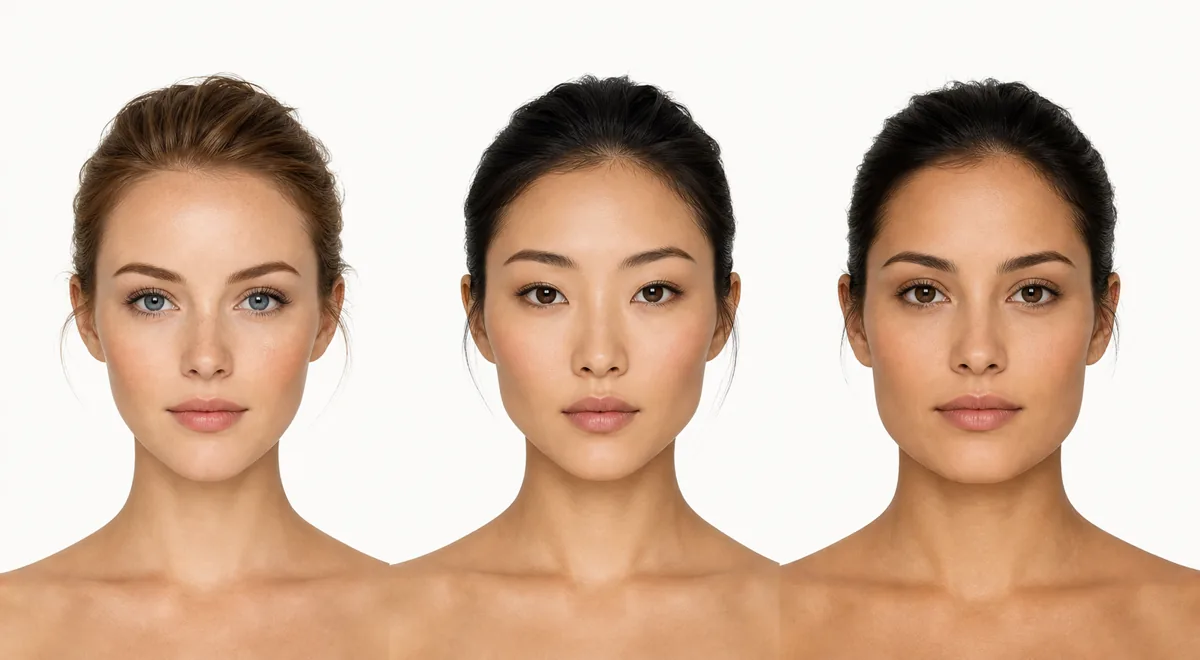
Heart is easiest to separate from diamond and triangle when you compare the widest area first.
| Shape | Widest area | Chin and jaw | Best check |
|---|---|---|---|
| HeartUpper-face-led outline | Forehead or temples usually read widest. | Jaw narrows and the chin looks smaller or tapered. | Check whether the forehead is wider than both cheekbones and jaw. |
| DiamondCheekbone-led outline | Cheekbones are clearly the widest point. | Forehead and jaw are both narrower, with a tapered chin. | Measure cheekbone width first, then compare forehead width. |
| TriangleLower-face-led outline | Jawline is wider than the forehead. | Lower face feels broader or heavier. | Look at whether the jaw, not the forehead, dominates the outline. |
Best Hairstyles for a Heart Face Shape
The goal is usually to reduce heavy visual weight at the top and add softness or balance near the lower face. That does not mean hiding the forehead; it means choosing volume and parting carefully.
| Styling goal | Try | Be careful with |
|---|---|---|
| Balance a wider forehead | Side-swept bangs, curtain bangs, soft layers, or a side part that breaks up the upper face. | Very flat center parts or heavy height that makes the forehead look broader. |
| Add softness near the jaw | Chin-length bobs, collarbone layers, waves below the cheekbone, or texture around the lower face. | Cuts that end exactly at the widest temple area with no lower-face movement. |
| Keep the chin from looking too sharp | Soft ends, rounded layers, and beard or makeup choices that add gentle lower-face balance. | Pointed goatees, severe slick-backs, or very sharp contour only around the chin. |
Glasses, Beard, and Styling Tips for Heart Faces
Once the shape is confirmed, the best choices usually balance a wider upper face with a narrower chin.
Glasses for heart face shape
Lightweight oval, round, rimless, low-profile rectangle, and softly rounded frames often work well. Be careful with very heavy top bars or oversized cat-eye frames if they make the forehead look wider.
Heart face shape men
For men, hairstyles with moderate side control and some movement around the fringe can work better than extreme height. Beard styles that add gentle width around the jaw or chin can balance a narrow lower face.
Makeup and contour direction
Soft contour near the temples and gentle color near the lower cheek can balance the outline. Avoid making the chin look even sharper with very strong highlight only at the tip.
Common Heart Face Shape Mistakes
Most wrong heart-face results come from hair coverage, camera angle, or treating one feature as the whole answer.
- Calling every narrow chin a heart shape: A narrow chin can also appear on diamond faces. You still need to check whether the forehead, not the cheekbones, is the widest area.
- Ignoring bangs or hair volume: Heavy fringe, temple volume, or pulled-back hair can change how wide the upper face looks.
- Using one close selfie: A close phone lens can enlarge the forehead and nose, making a balanced face look more heart-shaped.
- Choosing styles only from the label: Heart shape is a starting point. Hair texture, glasses size, beard density, and personal style should adjust the final choice.
Heart Face Shape FAQ
Related Face Shape Tools
- Face Shapes Chart - compare heart next to the other common face types.
- Triangle Face Shape Guide - identify a narrower forehead and wider jaw.
- Diamond Face Shape Guide - check the closest alternative when cheekbones are widest.
- Face Shape Hairstyle Detector - turn your result into haircut direction.
- Face Shape Detector for Glasses - apply your face shape to frame choices.
Last updated: July 2, 2026