Oblong Face Shape: How to Tell, What Works, and What to Avoid
A practical guide to recognizing a long or oblong face shape, checking it against oval and rectangle faces, and choosing haircuts, glasses, and grooming choices that add balance.

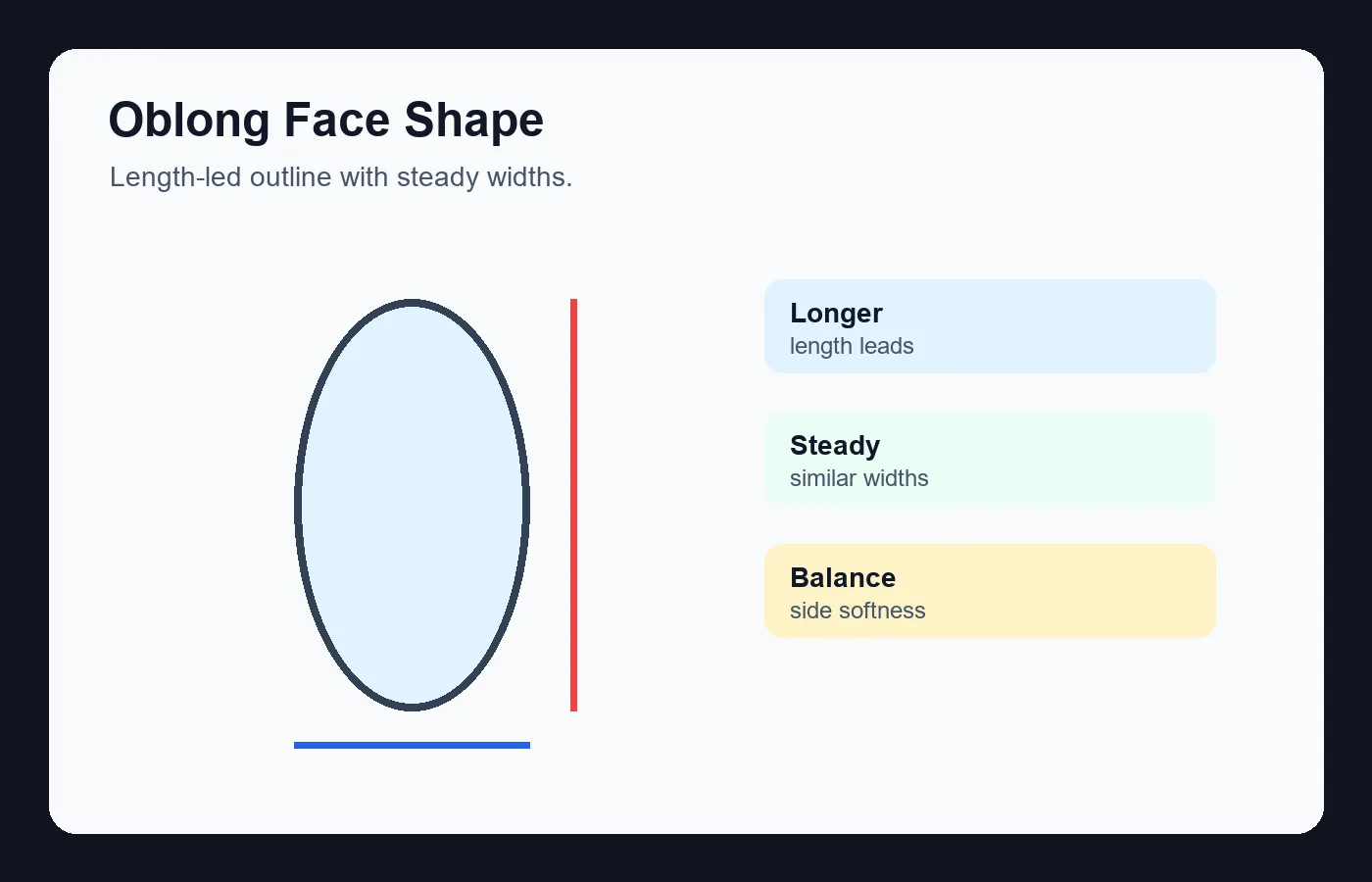
Table of Contents
Search results for oblong face shape often jump straight to celebrity examples or haircut lists. That is useful only after you know whether your face is truly oblong, oval, or rectangular. This guide starts with the visible signs, then shows how to measure, how to compare nearby face shapes, and how to use the result for hairstyles, glasses, and beard choices.
Oblong Face Shape Signs
An oblong face shape is defined by proportion. One long photo angle is not enough; look for the same length-led pattern across the forehead, cheeks, jaw, and chin.
- Face length is the dominant feature: The face reads noticeably longer than it is wide, even when the photo is straight and evenly lit.
- Forehead, cheekbones, and jaw are similar in width: Unlike heart or diamond faces, no single width point strongly dominates the outline.
- Sides look fairly straight: The outer face line often looks vertical from temples toward the jaw instead of strongly curved.
- Chin may look longer or softly squared: The lower face can add length, but it does not always look sharply pointed.
Best first check
If your face looks long and the widths are close from top to bottom, oblong is more likely than oval. If the jaw is very angular, also compare rectangle.
How to Measure an Oblong Face Shape
Use a front-facing photo or mirror with your hair away from the hairline. Avoid wide-angle selfies because they can stretch the center of the face and make an oval face look oblong.
- Measure face length: Compare the hairline-to-chin distance with the widest visible width. Oblong faces usually have length as the clear lead signal.
- Measure forehead width: Check whether the upper face is close to cheekbone and jaw width rather than much wider or narrower.
- Measure cheekbone width: Cheekbones can be slightly widest, but the difference is usually not as strong as a diamond face.
- Measure jaw width: A similar jaw width points toward oblong or rectangle; a much narrower jaw may point toward heart or diamond.
- Compare the ratio and outline: If length leads and the side outline stays steady, use the oblong styling rules. If the outline is more softly balanced, compare oval instead.
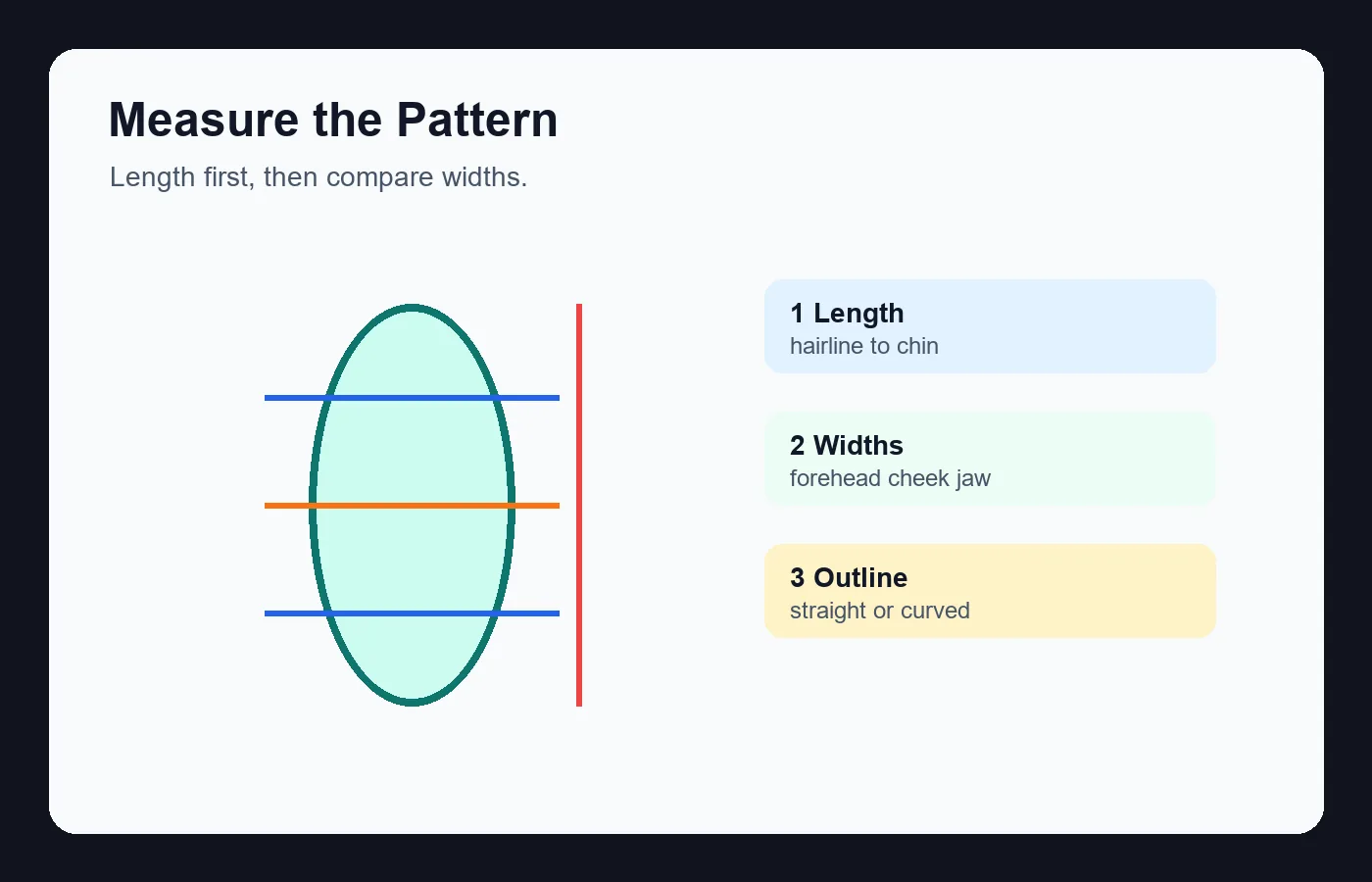
Measure length first, then compare whether forehead, cheekbones, and jaw stay close in width.
Oblong vs Oval vs Rectangle Face Shape
Oblong, oval, and rectangle all can look longer than wide. The practical difference is whether the face reads balanced, length-led, or angular.
| Shape | Length signal | Side outline | Best check |
|---|---|---|---|
| OblongLength-led outline | Length is clearly stronger than width. | Sides are fairly straight or gently rounded. | Check whether width stays similar from forehead to jaw. |
| OvalBalanced long outline | Length is slightly greater than width, but the face feels balanced. | Sides curve softly toward a rounded chin. | Check whether no feature dominates the outline. |
| RectangleAngular long outline | Length leads and jaw or forehead feel angular. | Sides are straighter with stronger corners. | Check the jaw corners and forehead width. |
Best Hairstyles for an Oblong Face Shape
The goal is not to hide length completely. A good oblong face shape hairstyle adds side movement, fringe, or texture so the face looks balanced instead of stretched.
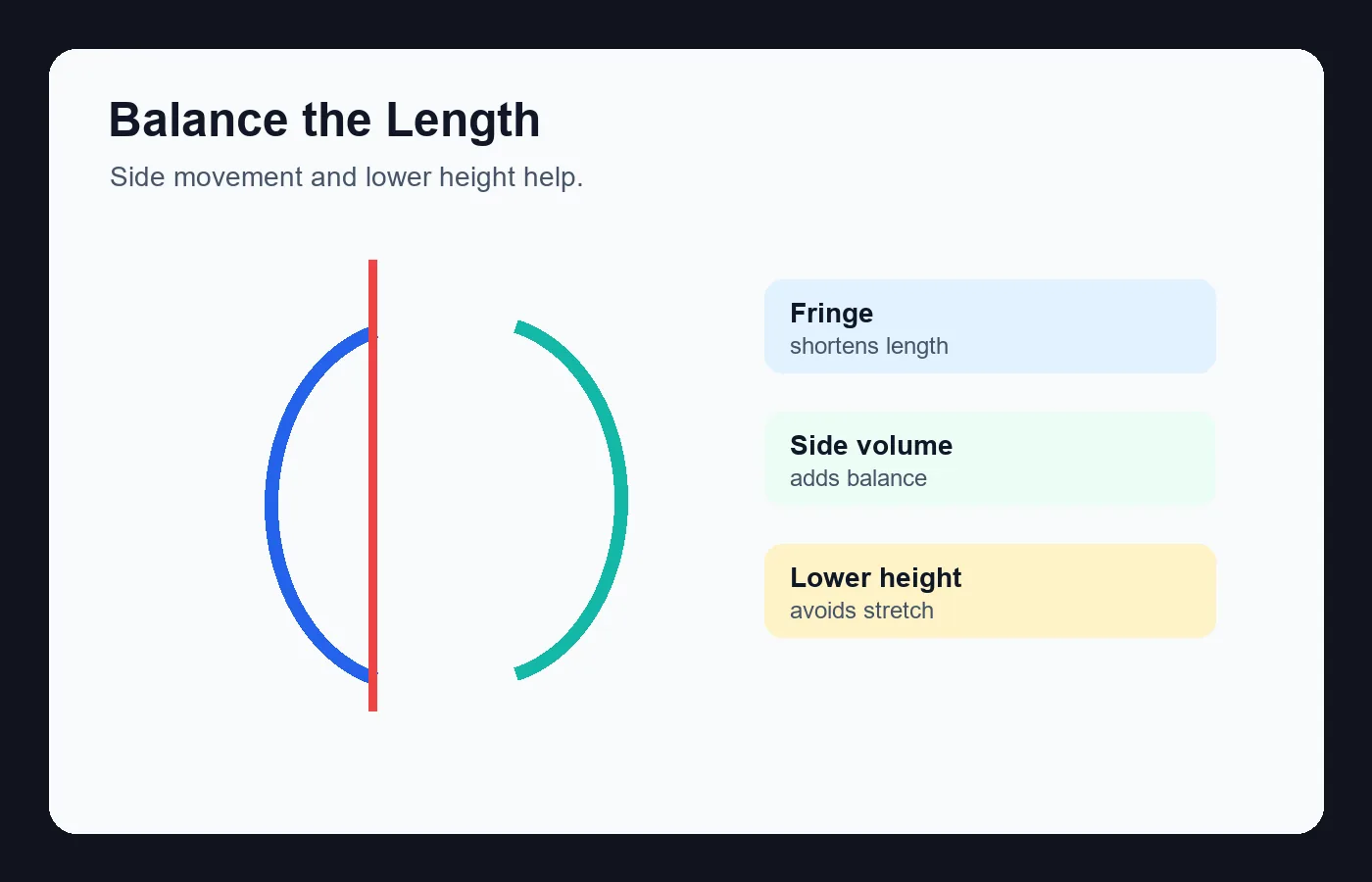
For oblong faces, side movement and fringe often balance length better than extra height on top.
| Styling goal | Try | Be careful with |
|---|---|---|
| Reduce visual length | Curtain bangs, side-swept fringe, textured crops, shags, lobs, and waves around cheek level. | Tall pompadours, very high quiffs, and slick height. |
| Add side balance | Layering that opens near the cheeks or jaw, curls, low-volume side parts, and medium movement. | Pin-straight long hair with no layers if it makes the face look longer. |
| Balance men's cuts | Caesar cut, French crop, Ivy League with controlled top, low fade, or medium side texture. | High skin fades, tight sides plus high top, and long pointed goatees. |
Glasses, Beard, and Styling Tips for Oblong Faces
Once you confirm the shape, the best choices usually reduce vertical emphasis and add controlled width.
Glasses for oblong face shape
Choose frames with enough lens height and width to interrupt the vertical line of the face. Tall square, softly rectangular, browline, and frames with a stronger top edge often work well. Very narrow frames can make the face look longer.
Oblong face shape men
For men, avoid stacking a tall hairstyle on top of an already long outline. Textured crops, Caesar cuts, side-swept fringe, medium layers, and low or mid fades usually balance better than high fades, pompadours, or very slick height.
Beard and makeup direction
Beards that add a little side or jaw fullness can help shorten the visual length. Long pointed goatees, very narrow chin beards, or heavy vertical contour can exaggerate the oblong effect.
Common Oblong Face Shape Mistakes
Most wrong calls happen when a photo angle or hairstyle creates temporary length. Check the pattern before making style decisions.
- Calling every long-looking selfie oblong: A phone held too high or too close can stretch the face and narrow the sides.
- Ignoring hair height: Tall volume, high fades, and slicked-back height can make an oval face look more oblong in pictures.
- Confusing oblong with rectangle: Rectangle faces usually have a stronger jaw and more angular corners. Oblong can be long without reading sharply square.
- Choosing only long flat hairstyles: Very long, flat hair can repeat the vertical line. Side layers, waves, bangs, or shoulder-level movement usually add more balance.
Oblong Face Shape FAQ
Related Face Shape Tools
- Oblong Face Shape Hairstyles for Men - choose a haircut by hair type, side volume, fringe, and maintenance.
- Face Shape Calculator - compare forehead, cheekbone, jaw, and length ratios.
- Face Shapes Chart - see oblong next to the other six common face types.
- Face Shape Hairstyle Detector - connect your result to haircut and styling ideas.
- Face Shape Detector for Glasses - turn your face shape result into frame suggestions.
Last updated: June 18, 2026