12 Oblong Face Shape Hairstyles for Men That Balance Length
A practical haircut guide for long and rectangular face proportions, with choices by hair type, length, maintenance, and barber technique.

Contents
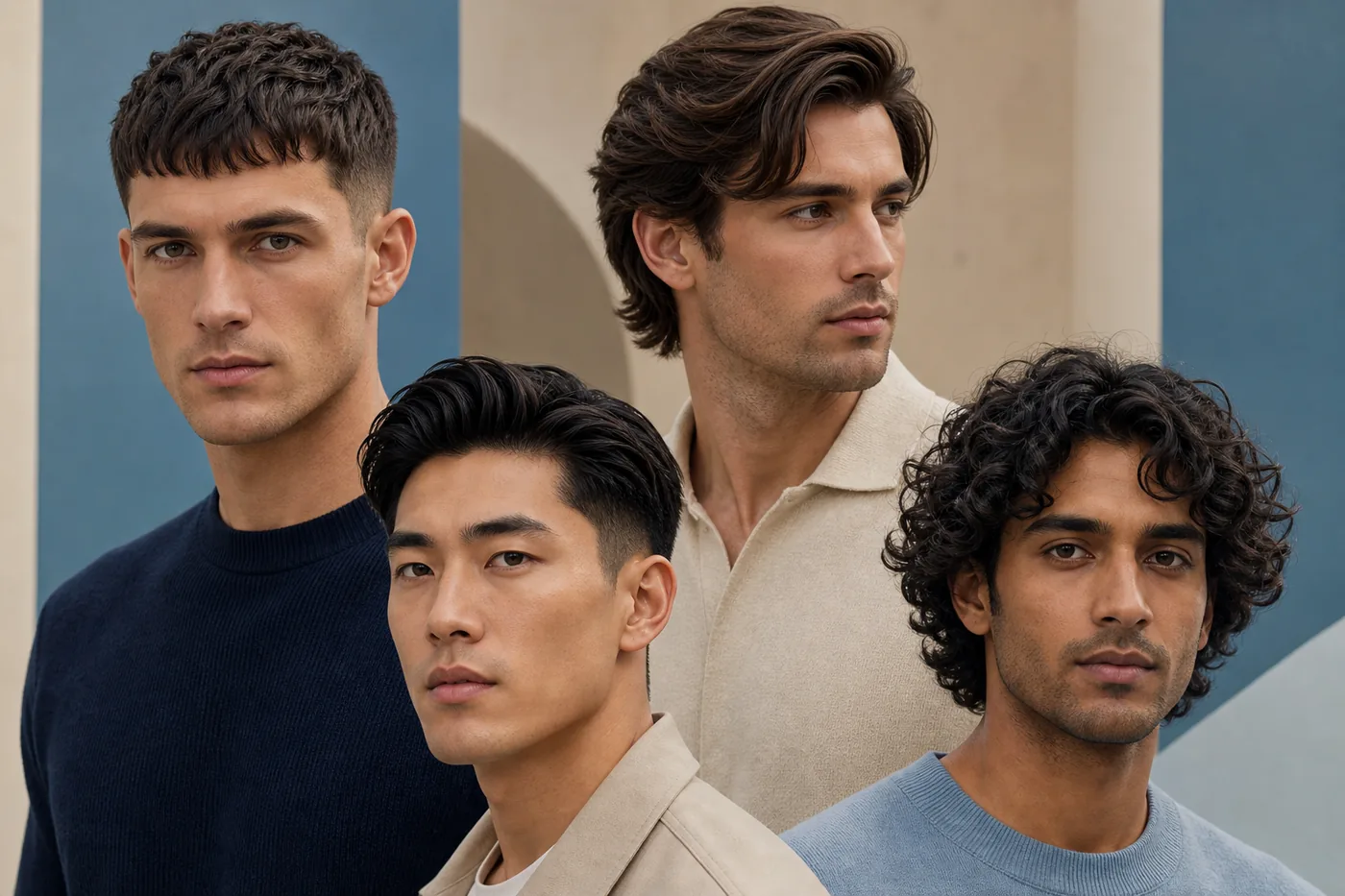
An oblong face is noticeably longer than it is wide, often with a forehead, cheekbone area, and jaw that stay relatively similar in width. That does not mean you need to hide your face or follow one rigid haircut rule. It means the haircut should make an intentional decision about vertical height, side volume, fringe, and beard length. This guide separates haircut names from the design choices that matter, so you can adapt the result to straight, wavy, curly, coily, thick, or thinning hair instead of copying a reference photo that may not suit your growth pattern.
What an oblong face haircut should accomplish
A good haircut does not need to make an oblong face look oval. It should create a proportion you like while working with your density and daily routine. Four design levers matter more than the trend name.
- Limit vertical height: Keep the top textured or shaped without building a narrow tower above the forehead.
- Preserve useful side weight: Low tapers, scissor-cut sides, curls, or medium layers prevent the face from looking even narrower.
- Interrupt the long line: A fringe, side sweep, loose part, or forward texture creates a horizontal break across the forehead.
- Coordinate facial hair: Short stubble or width at the jaw can add structure, while a long pointed goatee repeats the vertical line.
The most useful rule
Choose one balancing feature—fringe, side texture, moderate width, or a lower fade—then keep the rest simple. You do not need all four at once.
12 best oblong face shape hairstyles for men
The table is a decision guide rather than a ranking. Bring one or two reference photos, but describe the shape you want in plain language because the same haircut name can produce very different proportions.
| Haircut | Why it works | What to ask for | Best for |
|---|---|---|---|
| Textured French crop | Forward texture reduces visible forehead height and breaks the long line. | Broken fringe, textured top, low taper, no excessive crown height. | Straight, wavy, fine, or thick hair |
| Caesar cut | A short horizontal fringe gives a clean, low-maintenance proportion. | Even short top, defined but soft fringe, blended sides. | Straight or thinning hair |
| Side-swept fringe | Diagonal movement adds interest without building a tall center. | Enough front length to sweep, soft layers, low side transition. | Straight or wavy medium density |
| Low taper with textured top | Keeps side weight while giving the top shape and separation. | Low taper at neck and sideburns, moderate top height. | Most hair types |
| Curtains or middle-part layers | Movement near the temples and cheeks adds horizontal balance. | Cheek-level layers and a relaxed, not flat, center split. | Medium straight or wavy hair |
| Medium bro flow | Side and back movement softens a long, straight outline. | Scissor layers, natural ear coverage, controlled crown volume. | Thick, wavy, or straight hair |
| Curly fringe | Curl width and forehead coverage balance vertical length naturally. | Preserve curl groups, shape the sides, allow for shrinkage. | Curly hair |
| Rounded coily crop | A wider middle silhouette avoids a narrow high-top effect. | Low taper, controlled top, preserved temple fullness. | Coily hair |
| Ivy League with soft part | Polished shape without the extreme height of a formal quiff. | Short side part, scissor texture, low taper, modest lift. | Professional straight or wavy hair |
| Crew cut with low fade | Short and practical while avoiding the lengthening effect of a high fade. | Low fade, slightly longer front, natural texture. | Active or low-maintenance routines |
| Layered shag | Distributed movement adds width at the temples, ears, and jaw. | Soft layers and texture without a tall crown. | Medium to long wavy hair |
| Even buzz with balanced stubble | A uniform cut removes misleading height; beard width can add structure. | Even guard or very subtle low taper, tidy short beard. | Thinning hair or minimal maintenance |
How to balance length without making the haircut flat
Men with long faces are often told to avoid all volume, but completely flat hair can make the outline look longer too. The better goal is width-aware volume: movement that spreads slightly sideways or forward instead of rising only upward.
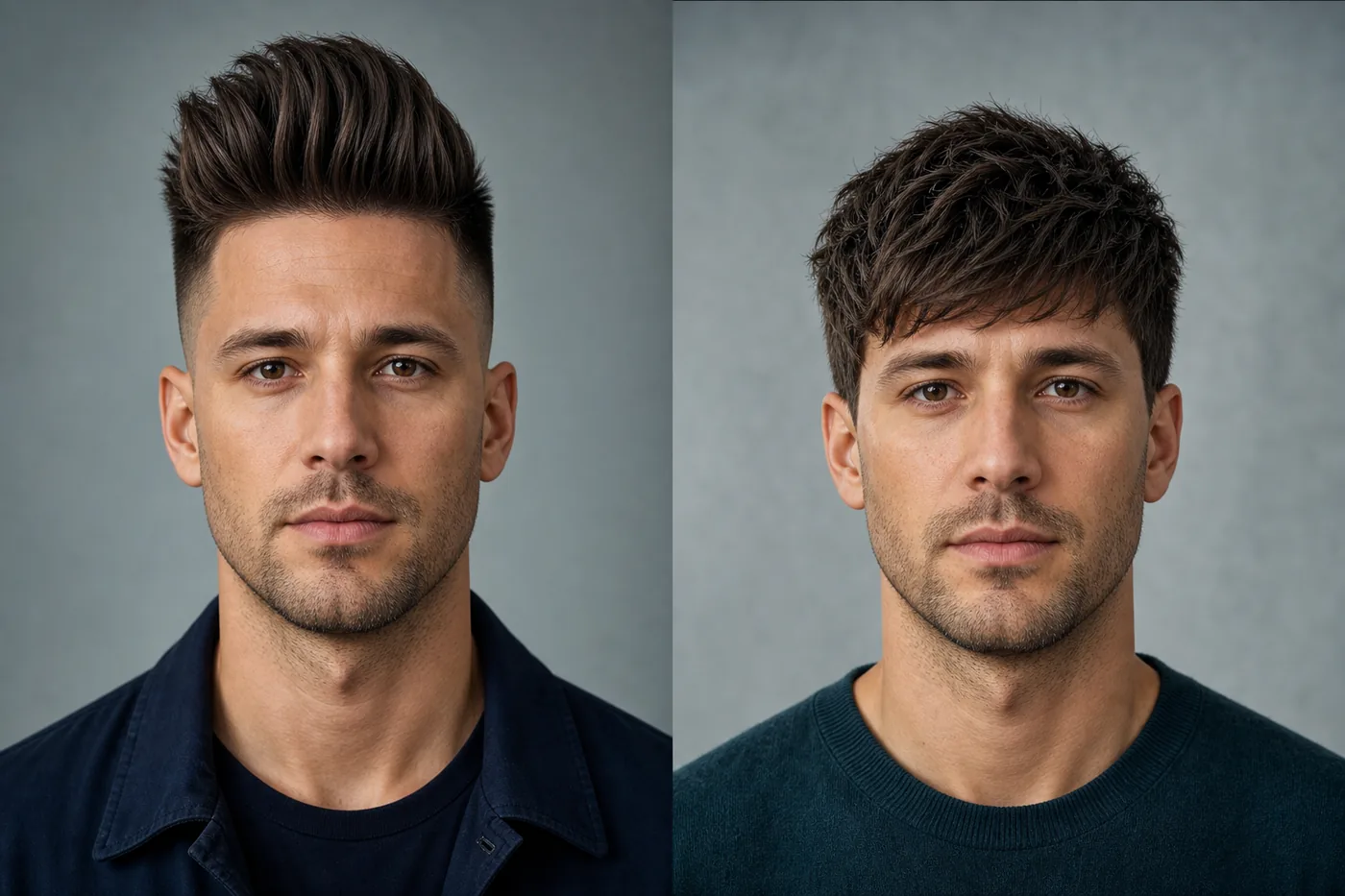
The right style keeps useful texture while moving volume forward and outward instead of only upward.
- Use moderate top height: A little lift keeps the cut lively; extreme narrow height is what usually exaggerates length.
- Choose low or soft transitions: A low taper or blended scissor side keeps visual weight near the temples and cheekbones.
- Place texture forward or diagonal: French crops, curtains, and side-swept styles redirect the eye across the face.
- Match fringe to the forehead: A full fringe shortens the visible forehead most; a broken fringe gives a lighter effect and is easier for fine hair.
Choose an oblong face haircut by hair type and length
Face shape narrows the design goal, but hair behavior determines the practical cut. Ask how the style looks without product, how often it needs trimming, and whether humidity changes the silhouette.
Straight or fine hair
Fine hair benefits from internal texture and a shape that does not depend on heavy wax. A French crop, Ivy League with a soft side part, short curtains, or a layered medium cut can create movement without exposing sparse areas.
- Keep the fade low rather than removing all side density.
- Use matte clay or light texture spray instead of glossy heavy pomade.
- Avoid a long flat center part if it separates and reveals too much scalp.
Thick or wavy hair
Natural bulk can provide the side balance an oblong face needs. Textured crops, medium flow, side-swept quiffs, bro flow, and layered curtains work when the barber removes weight selectively instead of thinning every area.
- Keep some width above the ears and around the temples.
- Ask for movement that follows the wave pattern rather than forcing it straight back.
- Dry the hair across or diagonally, not only upward.
Curly or coily hair
Curls and coils naturally build width, so the priority is shaping the outline. Rounded crops, curly fringe, low tapers, short twists, and controlled medium curls can balance length without flattening texture.
- Choose a low taper that preserves temple and side fullness.
- Ask for a silhouette that is wider through the middle than at the very top.
- Account for shrinkage before setting fringe length.
Receding hairline or thinning crown
Do not chase height to cover thinning because the extra lift can emphasize both length and density contrast. A short textured crop, Caesar, crew cut with a low taper, or an even buzz with subtle beard width often looks more deliberate.
- Keep the front soft and textured rather than building a rigid wall.
- Reduce contrast between a thin top and skin-tight sides.
- Discuss realistic styling time before choosing a longer camouflage cut.
What to tell your barber
Face-shape language helps, but a barber needs concrete instructions about height, weight, transition, fringe, and maintenance. Use this five-part brief and adapt the numbers to your hair.
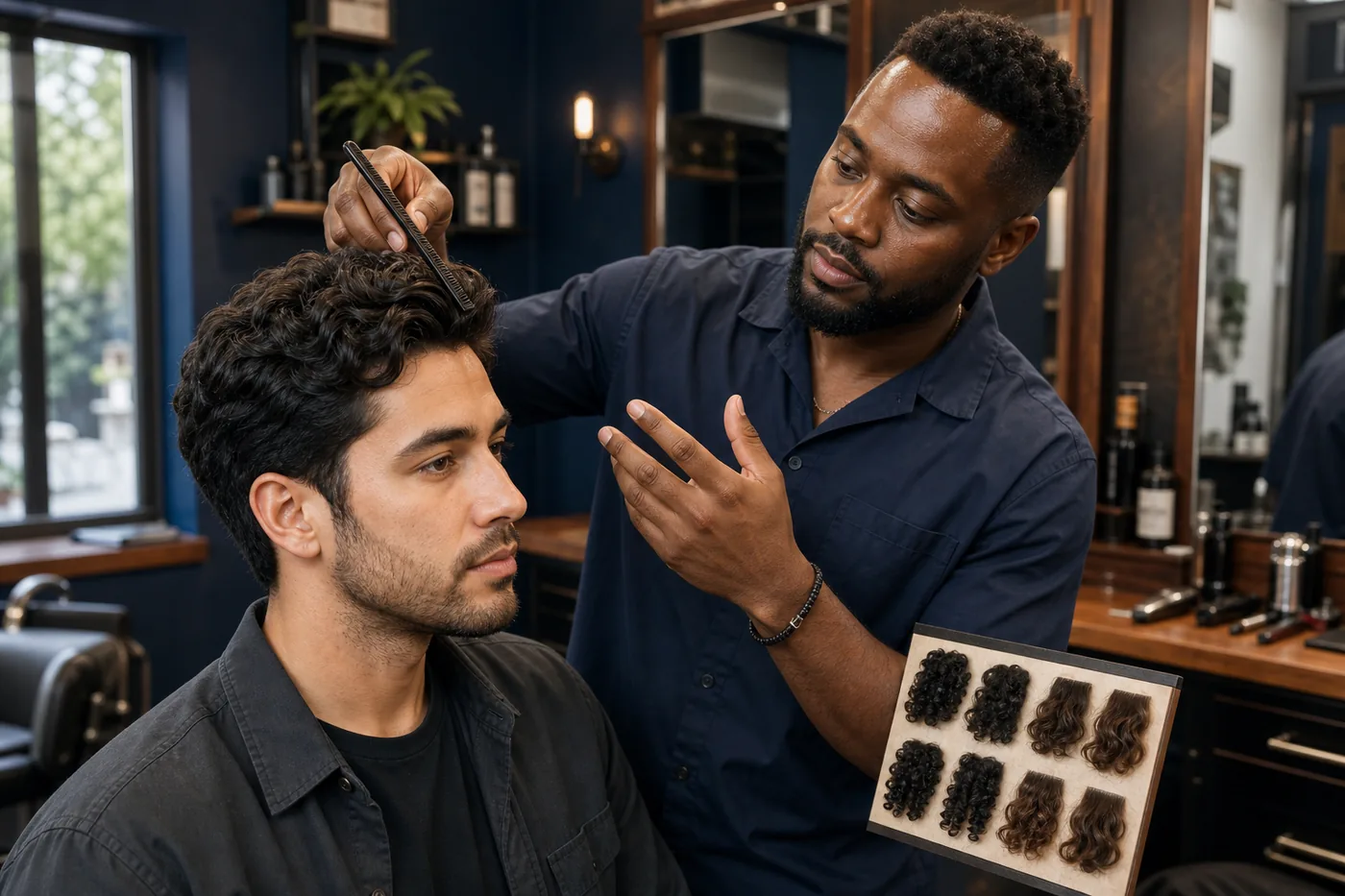
Show your barber the desired silhouette, then adjust it for density, curl pattern, cowlicks, and maintenance.
- State the goal: Say that you want to avoid extra vertical length and keep some balance through the sides.
- Choose the transition: Request a low taper, low fade, or scissor-cut sides rather than automatically asking for a high skin fade.
- Set top height: Ask for enough length to texture forward, diagonally, or into a relaxed part, without a tall narrow silhouette.
- Decide the fringe: Choose full, broken, side-swept, or no fringe based on forehead height, cowlicks, and styling tolerance.
- Confirm maintenance: Ask how the cut grows out, which product amount is realistic, and when the shape needs refreshing.
Styles to adjust—not automatically ban
No hairstyle is forbidden. These combinations simply tend to repeat vertical length, so adjust them when that is not the effect you want.
- High skin fade plus tall pompadour: The tight sides and high center create the strongest vertical contrast. Lower the fade, reduce height, or add a softer side sweep.
- Very long straight hair with no layers: A flat curtain below the jaw can extend the outline. Add cheek- or jaw-level movement and avoid a narrow top.
- Slicked-back hair with exposed high forehead: The open forehead and backward direction can lengthen the face. Use a looser finish, side part, or a small forward section.
- Long pointed beard: A narrow goatee or extended chin beard adds length below the face. Keep the chin shorter and preserve some width at the jaw if balance is the goal.
- Over-thinned sides: Removing every bit of side weight can make even a medium top look taller. Ask for controlled bulk rather than a boxy shape.
Confirm that your face is oblong before choosing the cut
A long-looking selfie is not enough. Camera distance, hair height, and facial hair can change the outline. Compare several clues before using this guide as your primary haircut framework.
- Use a straight-on photo: Keep the camera at eye level and farther away than arm's-length wide-angle selfie distance.
- Compare length with cheekbone width: An oblong face has clearly dominant length, not just a slightly longer oval proportion.
- Check horizontal widths: Forehead, cheekbones, and jaw often stay relatively close in width, with straighter sides than an oval face.
- Separate oblong from rectangle: Rectangle faces share length but usually show stronger jaw corners and a more angular outline. The haircut principles overlap, so men with mixed features can still use this guide.
Oblong face shape hairstyles for men FAQ
What is the best haircut for an oblong face man?
A textured French crop, side-swept fringe, low taper with moderate top texture, or medium layered style is a strong starting point. The best choice depends on density and curl pattern, but it should usually avoid combining skin-tight high sides with extreme height.
Is a fade good for an oblong face?
Yes, especially a low taper or low fade that keeps weight near the temples. A high skin fade can also work if the top stays controlled, but pairing very tight high sides with a tall quiff usually makes the face look longer.
Should men with long faces wear bangs?
Bangs are useful but optional. A broken, textured, side-swept, or curly fringe can shorten the visible forehead and redirect attention across the face. Cowlicks, fine density, and daily styling time should decide the exact fringe.
What haircut works for an oblong face with curly hair?
Try a curly fringe, rounded crop, low taper with preserved side fullness, or medium curls shaped wider through the middle. Avoid shaping every curl into a narrow tall column unless that is the intended look.
Are oblong and rectangle face haircuts the same?
They overlap because both shapes are long. Rectangle faces usually have a stronger, more angular jaw, while oblong faces can be softer. Both often benefit from moderate height, lower fades, side movement, and avoiding a very long pointed beard.