Face Shape Detector Accurate? How Reliable Are AI Face Shape Tests?
A practical way to judge an AI face-shape result without treating one photo, score, or label as a permanent verdict.

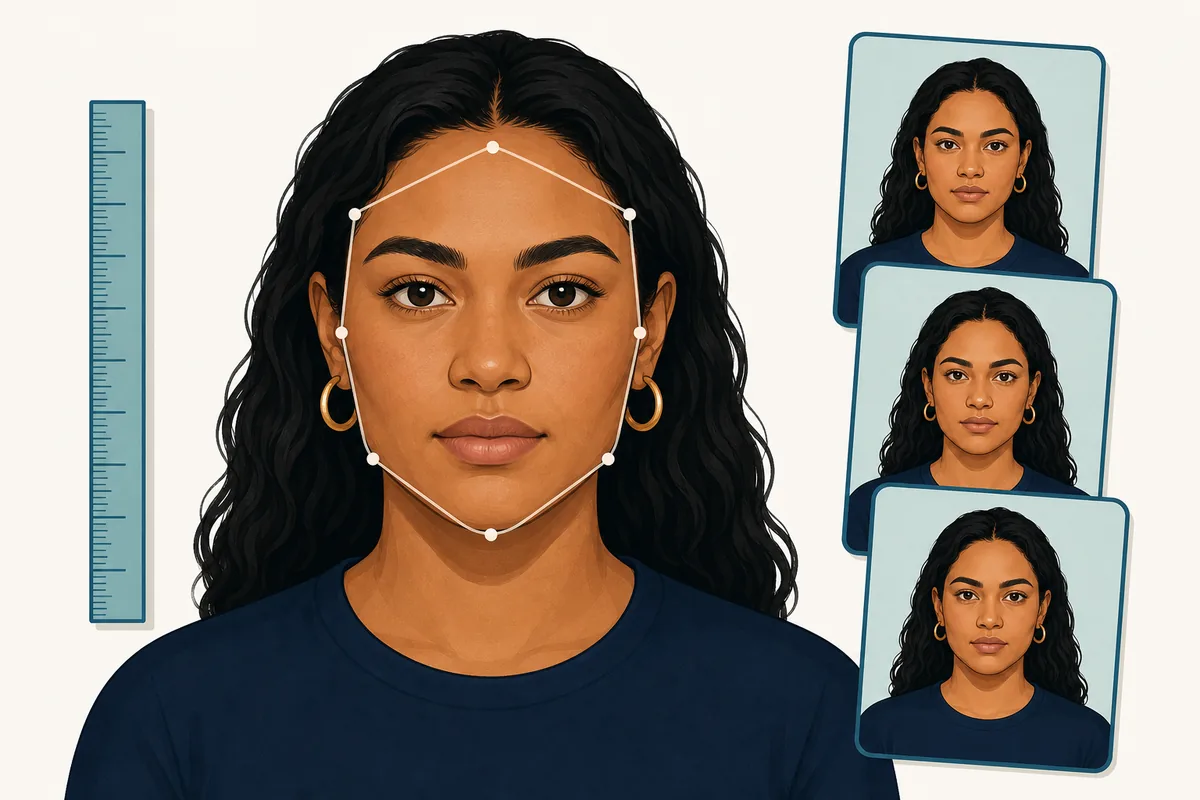
Searches such as “face shape detector accurate” usually come from someone who has received a result that feels surprising, or who has seen two tools disagree. The useful question is not whether every detector has one universal accuracy percentage. It is whether the result is repeatable, explainable, and helpful for the decision you are trying to make.
Short answer: is a face shape detector accurate?
Usually, it is accurate enough to suggest a practical face-shape category when the photo is clear and the face is close to the camera’s expected view. Accuracy drops when the visible outline is distorted, partly hidden, or close to a category boundary.
- Useful estimate: A good result can help you compare hairstyles, glasses, or manual measurements, especially when the same pattern appears in more than one photo.
- Not a fixed verdict: Face-shape labels are styling categories, not a medical measurement or an objective statement about identity, personality, or attractiveness.
- Borderline shapes are normal: Oval-oblong, round-square, and heart-diamond results can all be reasonable when two proportions are close.
What “accurate” means for a face-shape test
A face-shape detector is easier to judge when accuracy is split into three practical questions. This avoids overvaluing a single confidence number that may not explain how the result was produced.
Repeatability
Does a similar photo produce the same main category, or does the answer change every time the lighting moves? Stable inputs should usually create a stable direction.
Explainability
Can you see why the result was suggested by checking face length, the widest area, jaw angle, and chin shape? A result you can inspect is easier to use responsibly.
Decision usefulness
Does the category help you choose a next step, such as checking a frame shape or confirming measurements? Practical usefulness matters more than a decorative score.
Why face-shape results change from photo to photo
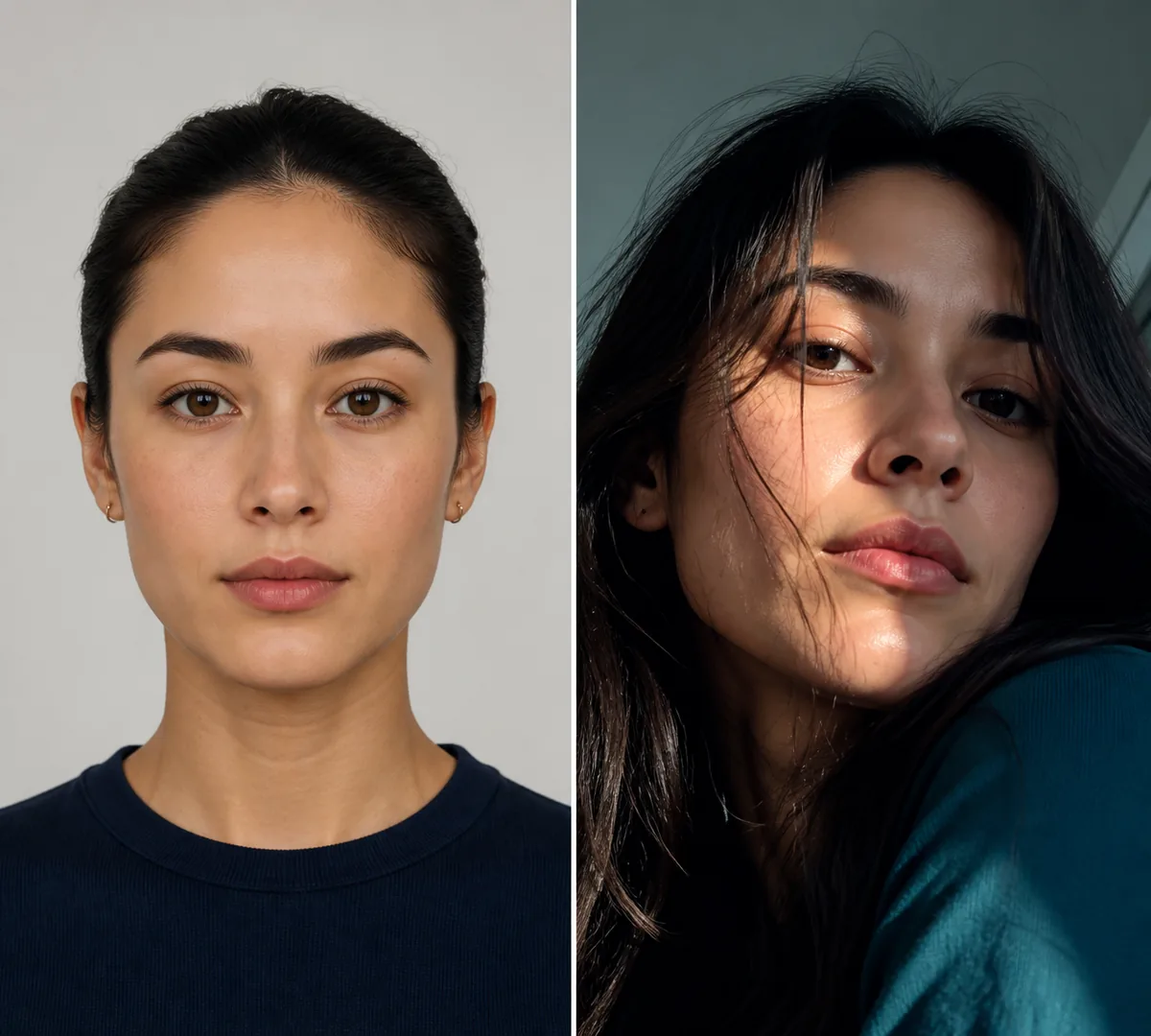
A photo turns a three-dimensional face into a flat image. Small changes in the image can change the apparent width, length, or outline before the detector even compares face-shape categories.
| Photo factor | What can change | Better input |
|---|---|---|
| Distance and lens | A close wide-angle selfie can enlarge the center of the face and change apparent length. | Use a little more distance and keep the camera near eye level. |
| Head angle | A turn or tilt can hide one cheekbone, shorten the jaw, or make the face look longer. | Face the camera straight on with both sides visible. |
| Light and shadow | Strong side light can make one side of the outline disappear or look sharper. | Choose soft, even light from in front of the face. |
| Hair and accessories | Bangs, loose hair, glasses, and large earrings can cover the forehead, jaw, or cheek area. | Move hair away from the outline and remove distracting filters. |
| Expression | A wide smile or tense jaw changes the visible mouth, cheeks, and lower-face shape. | Use a relaxed, natural expression. |
| Shape boundaries | Two categories may share similar length and width patterns, so different models can choose different labels. | Compare the top two results and verify the proportions manually. |
How to run a fair accuracy check
If you want to know whether a result is dependable, compare like with like. Do not compare a clear portrait with a close wide-angle selfie and then blame the label for changing.
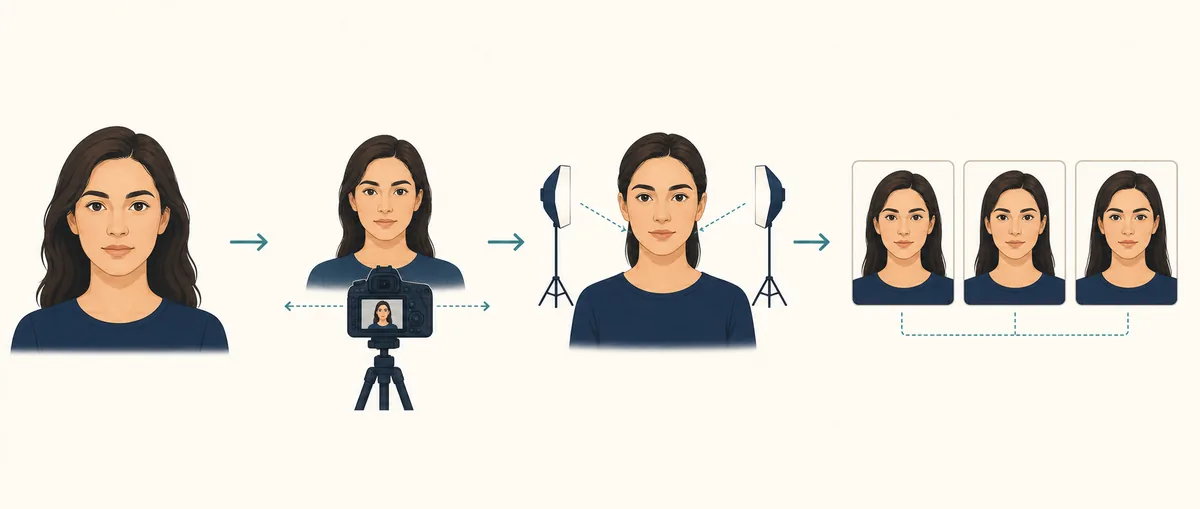
- Keep the setup consistent: Use the same camera, eye-level height, comfortable distance, neutral expression, and even light for each test.
- Take three usable photos: Use a small set of front-facing images rather than one lucky frame. Move hair away from the forehead and cheeks, and remove filters that reshape the face.
- Record the pattern: Write down the main label, the closest second label, and which area looks widest. A stable pattern is more useful than a single high-sounding confidence score.
- Check the four proportions: Compare face length, forehead width, cheekbone width, and jawline width with a ruler or the face-shape calculator. The numbers only need to be collected consistently.
- Use the result for a decision: If the same direction appears across the photos and the measurements, use it as a styling guide. If it does not, keep the result as a broad suggestion.
AI, manual measurements, and face-shape charts
No single method is best for every situation. A photo detector is fast, a manual check is transparent, and a chart is useful for comparing the categories. Combining two methods is often the most sensible choice when the result is close.
| Method | Strength | Limit | Best for |
|---|---|---|---|
| AI photo estimate | Fast and easy to repeat with a prepared photo. | Sensitive to image quality and model rules. | A quick starting category. |
| Manual measurements | Shows the actual comparison behind the label. | Needs consistent landmarks and a little time. | Borderline results and careful checks. |
| Face-shape chart | Makes nearby categories easier to compare visually. | A drawing cannot capture every individual outline. | Learning the common shape patterns. |
| Combined check | Balances speed, transparency, and repeatability. | Still depends on sensible input photos. | A styling decision you want to trust. |
How to read a borderline face-shape result
A borderline result does not automatically mean the detector failed. It may mean that your proportions sit between the simplified categories used by most styling guides.
- Look at the second label: Compare the top two categories and ask which visible signal separates them: overall length, cheekbone width, jaw angle, or forehead shape.
- Measure the widest areas: A consistent comparison of forehead, cheekbones, and jawline often clarifies a result that feels vague from a selfie alone.
- Choose the useful styling direction: If two categories remain close, use the recommendation that solves your real goal, such as adding side width, softening angles, or reducing vertical emphasis.
The goal is not to force a perfect label. A useful face-shape result should make your next choice clearer, even when the boundary remains fuzzy.
How to use a face-shape result without overtrusting it
Keep the label in the background and make the practical decision explicit. This keeps a face-shape test helpful without allowing it to dictate your personal style.
- Start with the photo conditions: Before comparing tools, make sure the input is front-facing, evenly lit, relaxed, and not too close to the lens.
- Compare the visible evidence: Note the widest region, overall length, jaw structure, and the closest second shape. These details are more useful than a label with no explanation.
- Match the tool to the decision: Use the calculator for transparent measurements, the detector for a quick estimate, and the face-shape guide when you need definitions and examples.
- Keep personal fit in the decision: Hair texture, frame comfort, maintenance, expression, and preference still matter. Face shape should generate ideas, not remove your choices.
For a transparent follow-up, read our face shape recognition guide, four face-shape measurements, face shape calculator and compare the result with the same proportions before choosing a styling direction.
Face Shape Detector Accuracy FAQ
Is a face shape detector accurate enough to trust?
It can be useful as an estimate when the photo is clear and the same pattern appears across more than one image. Treat it as a styling reference, then check measurements when the result is borderline.
Why does my face shape detector give a different answer each time?
Camera distance, lens distortion, head angle, lighting, expression, hair, glasses, and the model’s category rules can all change the visible outline. Compare similar photos instead of mixing very different inputs.
What photo gives the most reliable face-shape result?
Use a straight-on, eye-level photo with even light, a relaxed expression, enough distance from the camera, hair away from the face, and no face-changing filter.
Is an accurate face shape detector better than measuring?
They solve different problems. AI is faster, while measuring is easier to inspect. When accuracy matters, use an AI result as a starting point and compare face length, forehead, cheekbones, and jawline yourself.
Can two face-shape labels both be correct?
Yes. Many people sit between common categories such as oval and oblong or round and square. Choose the category that best explains your visible proportions and supports the styling decision you want.
Does a face shape detector measure attractiveness or health?
No. A face-shape test groups visible proportions for a practical styling reference. It should not be treated as a health assessment, identity judgment, or attractiveness score.
Last updated: August 22, 2026