What Face Shape Do I Have? How to Tell Your Face Shape
A proportion-first guide to reading your face in the mirror, checking a photo, and deciding when an AI estimate is useful.

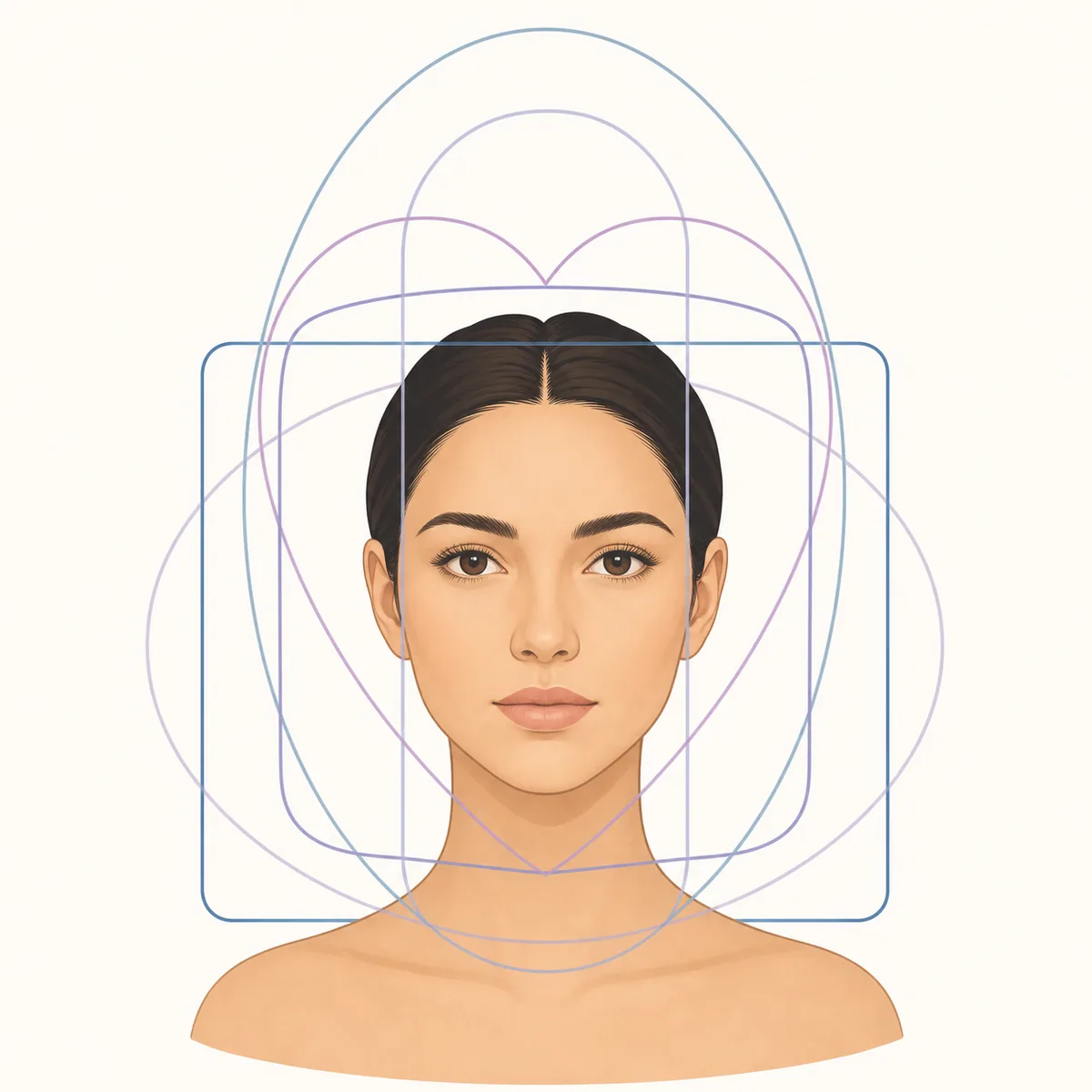
If you keep asking, “what face shape do I have?”, start with proportions rather than hairstyles, makeup, or a single celebrity comparison. Face shape is a broad description of the outline created by your forehead, cheekbones, jaw, chin, and overall length. The most useful answer is the pattern that stays consistent across a neutral mirror view and a well-framed photo.
What Face Shape Do I Have? Start With the Big Picture
You do not need a perfect measurement or a rigid category to get a useful answer. First decide whether your face reads as longer than wide, roughly as wide as it is long, or wider in one specific zone. Then use the forehead, cheekbone, and jaw relationship to narrow the result.
- Look at the outline: Pull hair away from the sides of your face and notice where the outline is widest, where it narrows, and whether the jaw looks soft, straight, or angular.
- Use more than one clue: A wide cheekbone area alone does not prove a diamond shape, and a rounded chin alone does not prove a round shape. Combine length, width, jaw, and chin cues.
- Expect borderline results: Oval can overlap with oblong, heart can overlap with diamond, and round can overlap with soft square. A close second result is normal, not a failed test.
- Separate shape from appearance: Face shape describes proportions. It is not a beauty score, a measure of weight, or a judgment about which features are better.
How to Compare the Four Face Proportions
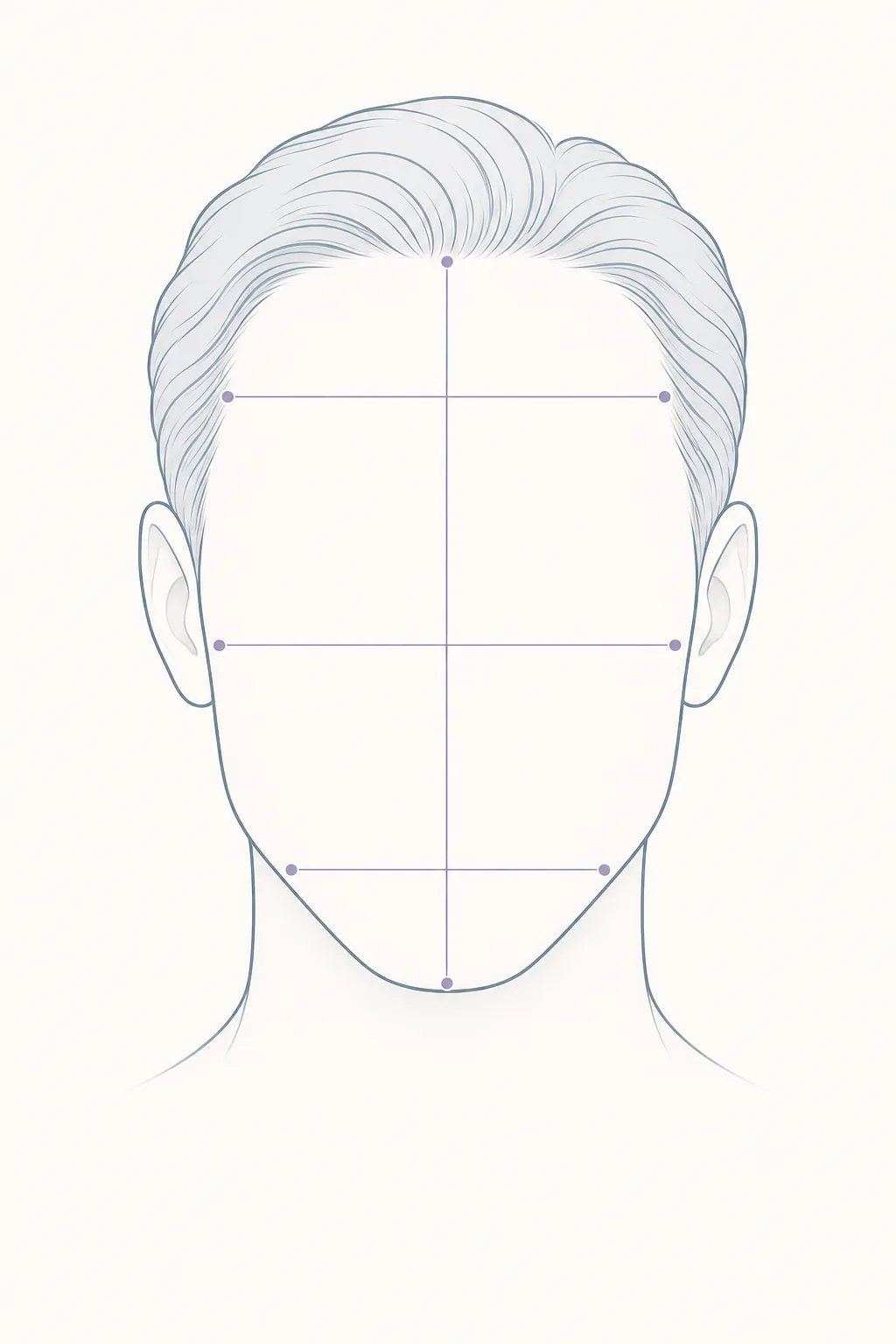
For a consistent manual check, compare the same four areas every time. You can estimate them in a mirror, mark them on a printed photo, or use a face shape calculator that explains what each measurement means.
| What to compare | What to look for | Why it helps |
|---|---|---|
| Face length | The distance from the hairline area to the lowest point of the chin compared with overall width. | A noticeably longer face points toward oblong or oval patterns; a shorter, balanced ratio supports round or square possibilities. |
| Forehead | Whether the forehead is narrower, similar to, or wider than the cheekbones and jaw. | A wider upper face can support heart or triangle comparisons, while a balanced forehead is common in oval and square patterns. |
| Cheekbones | The widest horizontal area of the face, usually around the upper cheeks. | Prominent cheekbones with narrower forehead and chin can suggest a diamond pattern. |
| Jaw and chin | Whether the jaw is broad, rounded, straight, tapered, or pointed. | The lower outline helps separate square from round, heart from diamond, and triangle from other wider-cheek patterns. |
What the Seven Common Face Shapes Look Like
The table below is a practical comparison, not a set of rules. Real faces often combine traits from two categories, and the same face can look different with a hairstyle, camera lens, expression, or lighting change.
| Face shape | Typical pattern | Often confused with |
|---|---|---|
| Oval | Longer than wide, gently curved jaw, forehead often a little wider than the chin. | Oblong when the face is especially long; round when length is less obvious. |
| Round | Width and length feel close, cheeks look full, and the outline has few hard angles. | Soft square when the jaw is broader or more defined than it first appears. |
| Square | Forehead and jaw are fairly broad, with straighter sides and a clear jaw angle. | Round when the jaw is softened by expression or lighting. |
| Heart | Forehead or upper face is wider and the chin narrows, sometimes with a widow's peak. | Diamond when cheekbones are the true widest point. |
| Diamond | Cheekbones are the widest area, with a narrower forehead and chin and more visible angles. | Heart when the upper face is wider than the cheekbones. |
| Oblong | Face length is clearly greater than width, while forehead, cheekbones, and jaw can be similarly wide. | Oval when the jaw is softer and the length difference is smaller. |
| Triangle | Forehead is narrower and the jaw or chin area becomes wider toward the bottom. | Heart when the chin tapers rather than widens. |
Take a Better Photo Before You Decide
A face shape answer is only as useful as the view you are checking. A close selfie from below, a wide-angle camera, or hair covering the jaw can change the apparent outline. Use a photo that makes proportions easier to see.
- Face a window or soft light: Even light reduces deep shadows under the brow, nose, and jaw. Avoid a bright window directly behind you.
- Keep the camera at eye level: Hold the phone straight ahead and leave a little space between the lens and your face. Very close selfies exaggerate the center of the face.
- Keep the expression neutral: Relax the jaw and lips. A broad smile can lift the cheeks and change the apparent width of the lower face.
- Clear the outline: Tie back hair, remove large glasses for the first check, and avoid filters that reshape the face or blur the jawline.

Common Reasons the Answer Looks Wrong
When two tools or two photos give different results, the difference usually comes from the input view or from a borderline shape—not from a meaningful change in your face.
Mistaking a hairstyle for a face shape
Full bangs, a high bun, or hair that widens at the cheeks can change the silhouette. Check the actual face outline with hair pulled back before deciding.
Using a tilted or mirrored photo
A tilted head changes the visible jaw angle, while a mirrored selfie can make a familiar face seem unfamiliar. Use a normal, straight-on image for comparison.
Forcing one category
Many faces sit between two common labels. If oval and oblong both fit, describe the dominant pattern and keep the second as a useful comparison.
Treating a detector as a diagnosis
An AI face-shape result is an estimate based on a particular image. It can guide styling or curiosity, but it should not be treated as an objective verdict about your appearance.
Which Way Should You Check Your Face Shape Next?
Choose the method that matches your goal. A manual check is useful when you want to understand the reasoning; a photo-based tool is useful when you want a quick second opinion.
Use the measurement guide
If you want to learn the process, follow the step-by-step guide for measuring face length, forehead, cheekbones, and jawline, then compare the seven patterns.
Use a calculator for a structured comparison
If you already have approximate measurements, the face shape calculator can organize them and show why a result leans toward one category.
Use a photo detector as a second opinion
If measuring is inconvenient, upload a clear front-facing photo to get an estimate. Compare the result with your own observations instead of accepting it blindly.
FAQ: What Face Shape Do I Have?
Can I tell what face shape I have without measuring?
Yes. A mirror or clear photo can give you a useful first estimate by showing the widest area, overall length, jaw angle, and chin shape. Measuring helps when two categories look similar, but it is not required for a practical styling decision.
Why do I get two different face-shape results?
Different camera angles, lenses, lighting, expressions, hair coverage, and classification rules can change the result. Compare the same neutral photo and look for the pattern that stays consistent rather than choosing the most flattering label.
What photo is best for finding my face shape?
Use a straight-on photo taken at eye level, with even light, a relaxed expression, hair away from the sides of the face, and no face-changing filter. Avoid a very close wide-angle selfie.
Is an AI face-shape result accurate?
It can be a useful estimate, especially when the photo is clear, but it is not a permanent or objective verdict. Borderline shapes can reasonably receive different labels, so treat AI as a second opinion alongside the visible proportions.
Does face shape decide which hairstyle or glasses I can wear?
No. Face shape is only one styling reference. Personal preference, hair texture, frame fit, comfort, and the look you want matter just as much. Use the category to generate ideas, not strict rules.
Last updated: August 18, 2026